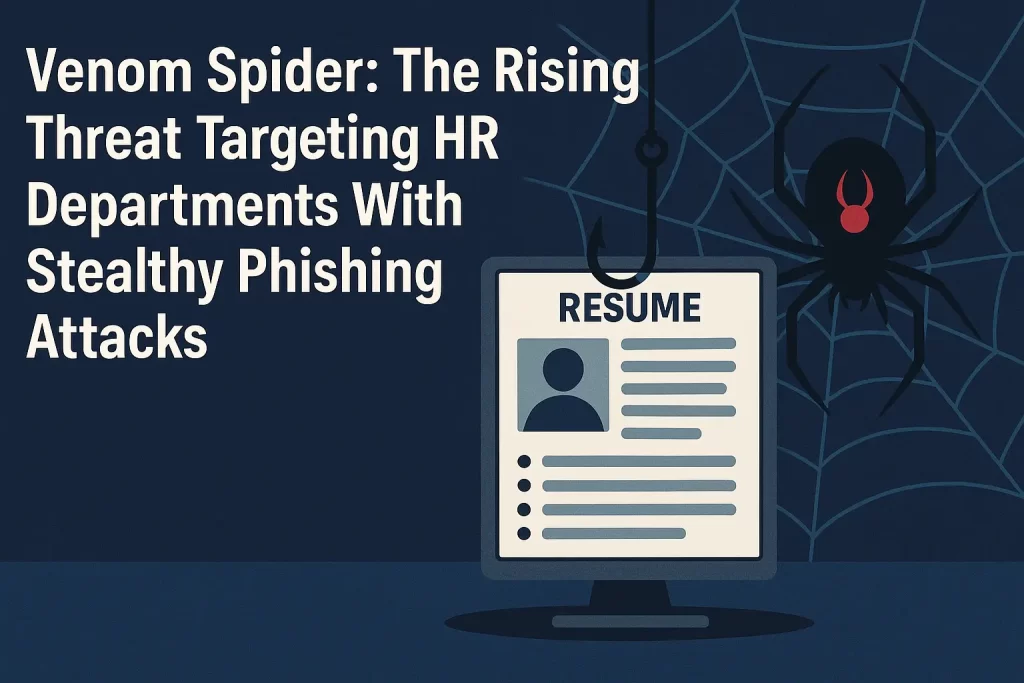
In the evolving world of cybercrime, threat actors are continuously seeking new entry points into organizations. A new spear-phishing campaign has recently drawn attention for its clever targeting of an often-overlooked department: human resources. This phishing attack, orchestrated by the financially motivated group known as Venom Spider, leads to stolen credentials, remote access and more.
A Deceptive Approach
Venom Spider has shifted focus to HR professionals by sending emails that appear to be legitimate job applications. These messages often come complete with what looks like a resume attached. However, hidden within pops out a backdoor malware known as More_eggs. Once opened, the malware silently installs itself, giving attackers covert access to the victim’s system.
These malicious attachments are typically disguised as .LNK, .VBS, or .ISO files – formats chosen to bypass conventional email security filters. What makes this campaign particularly dangerous is the use of server-side polymorphism, a technique where each instance of the malware is slightly altered at delivery. This allows it to evade detection tools and sandbox environments, significantly increasing the chances of a successful compromise.
Why HR is an Attractive Target
HR departments are frequently flooded with job applications, many of which contain attachments. This makes them prime targets for attackers looking to slip malware past the gates. Furthermore, HR personnel are often less trained in cybersecurity compared to IT or security teams, and they may not question unusual file types if they believe they are reviewing resumes.
Venom Spider has historically targeted industries like retail, pharmaceuticals, and entertainment – sectors that often rely on online transactions and customer portals. However, the pivot toward HR means virtually any organization with a hiring process could become a target.
Capabilities of the More_eggs Malware
Once deployed, More_eggs acts as a sophisticated backdoor. It allows attackers to:
- Steal credentials and personal data
- Perform reconnaissance within the network
- Download additional malware
- Execute commands remotely
In previous campaigns, cybercriminals used More_eggs as a loader for ransomware, meaning the initial infection could be just the beginning of a larger attack.
Real-World Risks and Broader Implications
Although specific breach reports tied to this latest campaign are still emerging, the tactics reflect a growing trend: cybercriminals are exploiting trusted business processes, like hiring, to get around traditional defenses. The attack chain begins with a simple act of trust: opening what appears to be a job application.
This technique not only undermines corporate security but could also jeopardize applicant data, internal communications, and company reputation.
How Organizations Can Defend Themselves
To protect against this growing threat, businesses should take a proactive approach:
- Employee Awareness: Provide targeted training for HR and other non-technical departments on how to identify phishing attempts and suspicious attachments.
- Advanced Email Filtering: Use tools that can scan for behavior-based threats and detect unusual file types.
- Endpoint Detection and Response (EDR): Implement EDR solutions that monitor and isolate suspicious activities in real-time.
- Attachment Policies: Establish rules for acceptable file formats in job applications and instruct staff not to open uncommon file types.
- Incident Reporting Protocols: Make it easy for employees to report potential phishing emails without fear of repercussion.
Final Thoughts
The Venom Spider phishing attack is a wake-up call for businesses that view cybersecurity as the sole responsibility of IT departments. In today’s threat landscape, every employee – from front-line staff to recruiters – plays a role in protecting the organization.
By extending security awareness and tools to all departments, companies can close off entry points that cybercriminals like Venom Spider are increasingly exploiting. It’s no longer just about securing networks – it’s about securing people, too.
