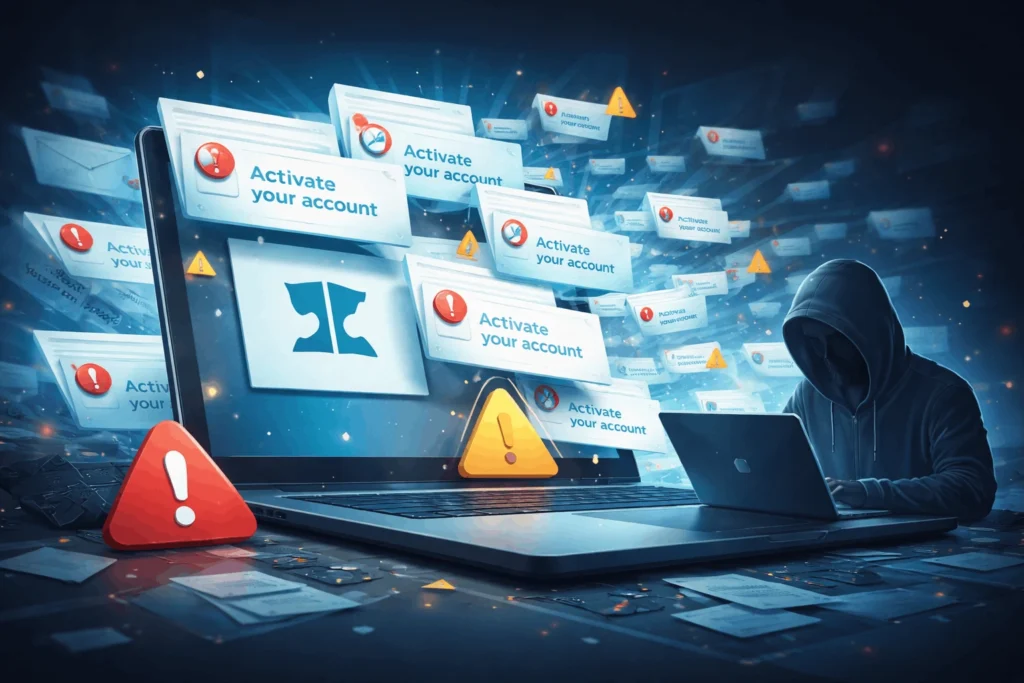
A renewed Zendesk spam wave is flooding inboxes worldwide with unsolicited “Activate your account” emails that appear to come from trusted companies. Many recipients never signed up for any service, yet the messages look authentic and often bypass spam filters. The scale and persistence of the campaign have raised concerns among security teams, especially as the emails originate from legitimate support platforms rather than traditional spam infrastructure.
This latest surge follows earlier incidents tied to the same abuse pattern. Attackers continue to exploit how Zendesk handles support ticket submissions, turning customer support tools into mass email delivery systems.
How the Zendesk Spam Wave Works
The Zendesk spam wave does not rely on malware, phishing kits, or compromised email servers. Instead, attackers exploit exposed support forms that allow anyone to submit a ticket using any email address. When a ticket is created, Zendesk automatically sends a confirmation or activation email to the supplied address.
Attackers automate this process at scale. They submit thousands of tickets across multiple Zendesk-powered portals, each time inserting a different victim email address. The result is a flood of legitimate-looking messages sent from real Zendesk systems on behalf of real organizations.
Because the emails originate from trusted infrastructure, email security tools often treat them as legitimate transactional messages. This allows the spam to land directly in inboxes instead of junk folders.
Why the Emails Look Legitimate
The messages typically prompt recipients to activate an account or confirm a support request. They include professional formatting, branded sender names, and proper authentication headers. For many users, the emails resemble genuine onboarding or support notifications they may have received in the past.
This credibility creates confusion rather than immediate suspicion. Recipients often wonder if an account was created using their email address without consent or if their data was exposed elsewhere. Even without malicious links, the volume and realism of the emails cause disruption and alert fatigue.
Not a Data Breach, But a Platform Abuse
Importantly, the Zendesk spam wave is not the result of a breach inside Zendesk’s core systems. Attackers are not accessing internal databases or stealing customer records. Instead, they are abusing default or poorly secured configurations that allow unrestricted ticket creation.
This distinction matters, but it does not reduce the impact. The abuse still damages trust in customer support communications and creates operational problems for companies whose brands appear in the emails.
Organizations affected by the campaign often receive a spike in confused support requests from users asking why they are receiving activation messages.
Why the Spam Keeps Coming Back
Zendesk has introduced additional monitoring and safety controls to limit abuse. However, the campaign persists because many organizations still leave ticket submission forms open to the public without verification or rate limiting.
Attackers only need to find exposed portals to restart the spam flow. As long as automated ticket creation remains possible, the tactic stays effective. The low cost and minimal technical effort make this approach attractive compared to traditional phishing campaigns.
Impact on Users and Organizations
For users, the impact includes inbox clutter, confusion, and anxiety about possible account misuse. Some recipients report receiving dozens or even hundreds of messages in a short time.
For organizations, the damage is reputational. Their brands become associated with spam even though they are victims of abuse themselves. Support teams must handle increased ticket volume while investigating issues they did not cause.
The campaign also highlights how legitimate business tools can be weaponized when security controls are not carefully configured.
How Organizations Can Reduce Abuse
Companies using Zendesk can significantly reduce exposure by tightening their support portal settings. Requiring verified accounts before ticket submission limits anonymous abuse. CAPTCHA challenges and rate limiting slow down automation. Monitoring sudden spikes in ticket creation helps detect misuse early.
These steps do not eliminate customer access, but they add friction that makes large-scale abuse far less practical.
What Users Should Do
Recipients who receive unexpected Zendesk activation emails should avoid interacting with the messages. Deleting them is usually sufficient. Since the emails are generated automatically, replying or clicking links serves no purpose and may create additional confusion.
The safest approach is to treat the messages as unsolicited notifications rather than indicators of a compromised account.
Final Thoughts
The return of the Zendesk spam wave shows how attackers continue to adapt by abusing legitimate platforms instead of breaking into systems. Even without malware or phishing links, the campaign creates real disruption by exploiting trust in everyday business tools.
As long as support systems remain open and lightly protected, similar abuse patterns will continue to surface. Stronger configuration choices, rather than new security products, remain the most effective way to shut this tactic down.
