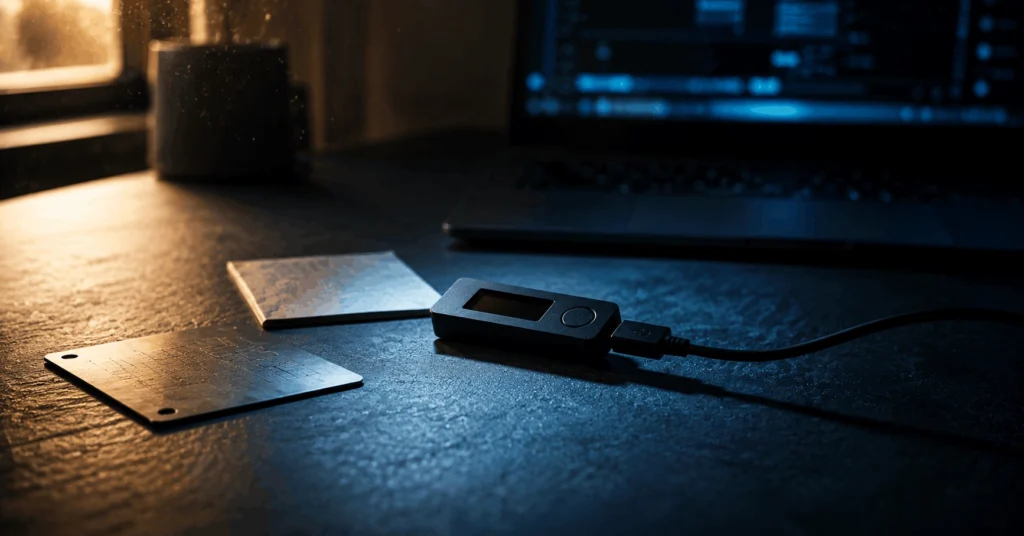
Crypto owners buy hardware wallets so their private keys never touch the internet. That logic still holds. Yet the Trezor data breach exposed personal details for nearly 14,000 customers. Attackers never came close to the devices themselves. Instead, they walked in through a shipping company.
The hardware wallet maker confirmed the incident on August 13, 2026, after its logistics partner reported unauthorized access. The stolen records include names, home addresses, email addresses, and phone numbers. For people who own crypto, that combination carries real weight.
What the Trezor Data Breach Actually Exposed
ShipMonk, the shipping and fulfilment provider behind Trezor orders, alerted the company on August 10. Attackers had reached systems holding customer order data. Trezor then split the damage into two groups.
The larger group covers 11,742 customers with full exposure. Their names, email addresses, phone numbers, and shipping addresses all sat in the stolen data. A second group of 1,947 customers faced partial exposure, limited to name, city, and email.
The Trezor data breach affects orders placed between May 10 and August 8, 2026. Customers in the United States, the United Kingdom, Sweden, Colombia, Brazil, Italy, and Portugal fall inside that window. Trezor stated that its own systems stayed secure, its services ran normally, and every device remains safe to use.
A Supply Chain Failure Three Layers Deep
The trail does not stop at the shipping provider. ShipMonk told affected customers that attackers exploited a flaw in Metabase, a third-party analytics platform it relies on. So the Trezor data breach began at a company most Trezor buyers have never heard of.
Metabase reported that intruders used a critical SQL injection zero-day to gain administrator access to customer instances. From there, they pulled data out. The vendor has since patched the flaw and invalidated active sessions, but the stolen records are already gone.
Other Companies Hit by the Same Flaw
Trezor was not alone. Laptop maker Framework and form builder Tally both notified customers after attackers hijacked their Metabase instances. ShipMonk has also received extortion emails from the ShinyHunters group. That suggests the stolen data may surface publicly or go up for sale.
The pattern repeats across the industry. Valve recently warned Steam hardware buyers in Europe after hackers breached CEVA Logistics, its shipping partner.
Why Leaked Shipping Data Hits Crypto Owners Harder
A leaked mailing list sounds minor at first. This one carries more weight. Anyone reading the stolen records learns three things at once. They see a person’s identity, their home address, and proof that they bought a crypto storage device.
That last detail changes everything. Criminals now have a filtered list of likely crypto holders with verified contact details. Phishing becomes easier, and physical risk becomes a real concern for high-value targets.
Expect Sharper Phishing Attempts
Trezor warned customers directly about what comes next. Scammers can use the leaked details to send convincing emails, place phone calls, or mail physical letters. Some will impersonate banks, crypto exchanges, or Trezor support staff.
History backs up that warning. In January 2024, a separate incident exposed data on 66,000 users through a third-party support portal. Attackers then used those details to phish for the 24-word recovery seed that unlocks a wallet. The Trezor data breach gives them a fresh starting point for the same trick.
That seed is the whole game. Anyone who types it into a fake website loses their funds instantly, and no support team can reverse the transfer. Trezor never asks for it, and no legitimate company ever will.
How to Protect Yourself After the Trezor Data Breach
Affected customers cannot pull their data back. Still, a few habits reduce the fallout.
Treat every unexpected message as hostile. Attackers armed with your real name and order history sound credible. So verify any request through official channels before you respond. Never enter your recovery seed anywhere except the device itself.
Watch for delivery scams too. A message referencing a real order looks legitimate because the sender knows the details. Check tracking through the retailer’s official site instead of clicking links.
Where a VPN Fits In
A VPN cannot undo a Trezor data breach that happened inside a vendor’s systems. It does limit what you expose going forward. Encrypting your connection hides your browsing from your internet provider and blocks snooping on public networks. That matters when you check wallet balances or exchange accounts away from home.
Many providers, including NordVPN, Surfshark, and ExpressVPN, also bundle threat protection that blocks known phishing domains. Pair that with unique passwords, a password manager, and app-based two-factor authentication. Also consider a separate email address for hardware purchases, because it keeps sensitive orders away from your main inbox.
Final Thoughts
You can choose a security-first company and still lose control of your data. The Trezor data breach happened because a partner of a partner ran vulnerable software. Customers had no say in that decision and no way to see the risk.
Vendors need to tighten how they vet third parties and how much data they hand over. Until that happens, assume your shipping details will leak eventually. This Trezor data breach will not be the last case of its kind. So build habits now that hold up when the next notification email lands.
