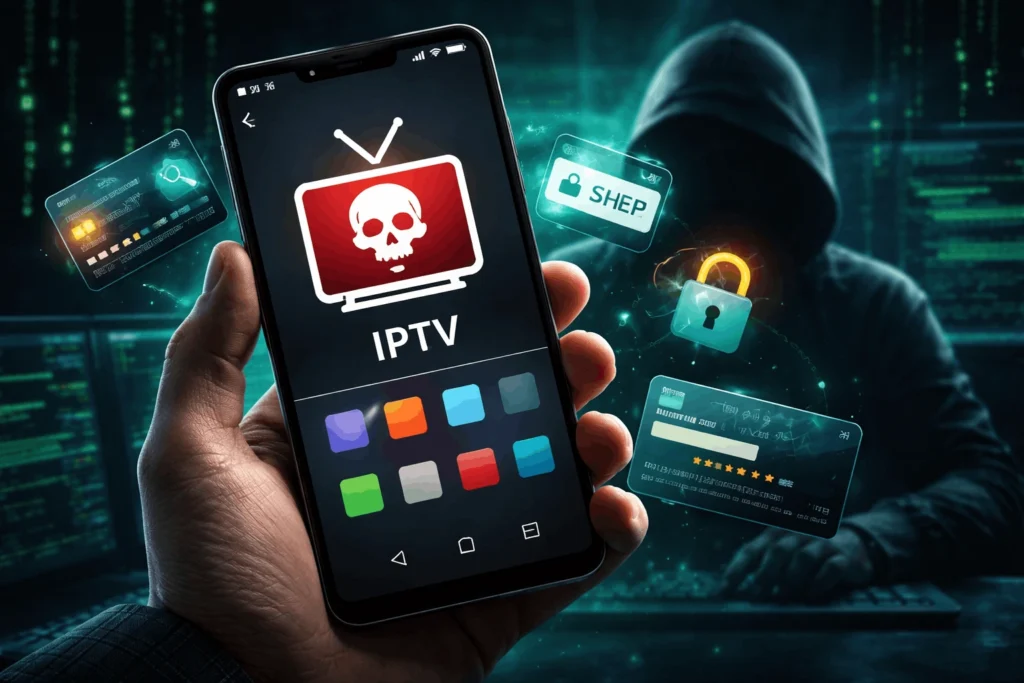
Massiv Android malware has emerged as a new banking threat targeting mobile users through fake IPTV applications. Attackers disguise the malware as a streaming app to trick users into installing it outside official app stores. Once active, it gives criminals deep access to infected devices and allows them to steal sensitive financial data.
Security researchers observed the campaign primarily targeting users in Southern Europe. The operation demonstrates how mobile banking threats continue to evolve, especially when combined with device takeover capabilities.
How Massiv Android Malware Spreads
Threat actors distribute Massiv Android malware through unofficial IPTV apps promoted on third-party websites. These apps appear to offer free or pirated television streaming services. However, the streaming functionality acts only as a cover for malicious activity.
Users typically download these apps through sideloaded APK files. Because they bypass official marketplaces, they avoid standard security screening. Once installed, the malware requests extensive permissions, including access to Android’s Accessibility Service.
Granting these permissions allows the attackers to control the device remotely and monitor user activity in real time.
What the Malware Does After Infection
After installation, Massiv Android malware begins collecting sensitive data from the device. It deploys screen overlay attacks that mimic legitimate banking login pages. When victims enter their credentials, the malware captures them instantly.
The threat also abuses Android’s MediaProjection API to record screen content. This technique allows attackers to view confidential information, including authentication codes and private messages. By combining Accessibility abuse with screen capture functions, the malware achieves full device takeover.
Researchers observed the malware intercepting SMS messages to bypass two-factor authentication. In some cases, attackers used stolen data to open financial accounts in the victim’s name. This tactic expands the impact beyond direct account theft and increases the risk of identity fraud.
Targeted Regions and Financial Focus
Investigations linked the campaign to attacks in Spain, Portugal, France, and Turkey. Researchers also reported attempts to harvest credentials connected to digital identity systems in Portugal. This focus indicates a strategic effort to exploit both banking infrastructure and government-linked authentication services.
Massiv Android malware does not behave like simple adware or spyware. It functions as a fully capable banking trojan with remote control features. Attackers can interact with banking apps directly on the victim’s device, reducing the likelihood of fraud detection.
Why IPTV Apps Remain a Popular Lure
Cybercriminals frequently exploit interest in IPTV services. Users searching for free streaming solutions often download apps from unofficial sources. This behavior creates an ideal distribution channel for malware campaigns.
By embedding malicious code inside IPTV-themed applications, attackers increase installation rates. The tactic works because users expect streaming apps to request broad permissions, which lowers suspicion.
How Users Can Protect Themselves
Users should avoid installing APK files from unverified websites. Official app stores apply security scanning that reduces exposure to malicious software. Keeping Google Play Protect enabled adds another layer of defense.
Users should also review permission requests carefully. Accessibility access should only be granted to trusted services. If a streaming app requests SMS, screen recording, or accessibility permissions, that behavior signals risk.
Anyone who suspects infection should uninstall the suspicious app immediately and change all banking passwords using a different, secure device.
Final Thoughts
Massiv Android malware highlights the growing sophistication of mobile banking threats. By posing as an IPTV app, attackers bypass user skepticism and gain powerful device control. The campaign shows how easily financial and identity data can be compromised when users install apps from untrusted sources.
Mobile security depends on cautious installation practices and strict permission control. As banking trojans continue to evolve, users must treat unofficial apps as high-risk software and prioritize trusted distribution channels.
