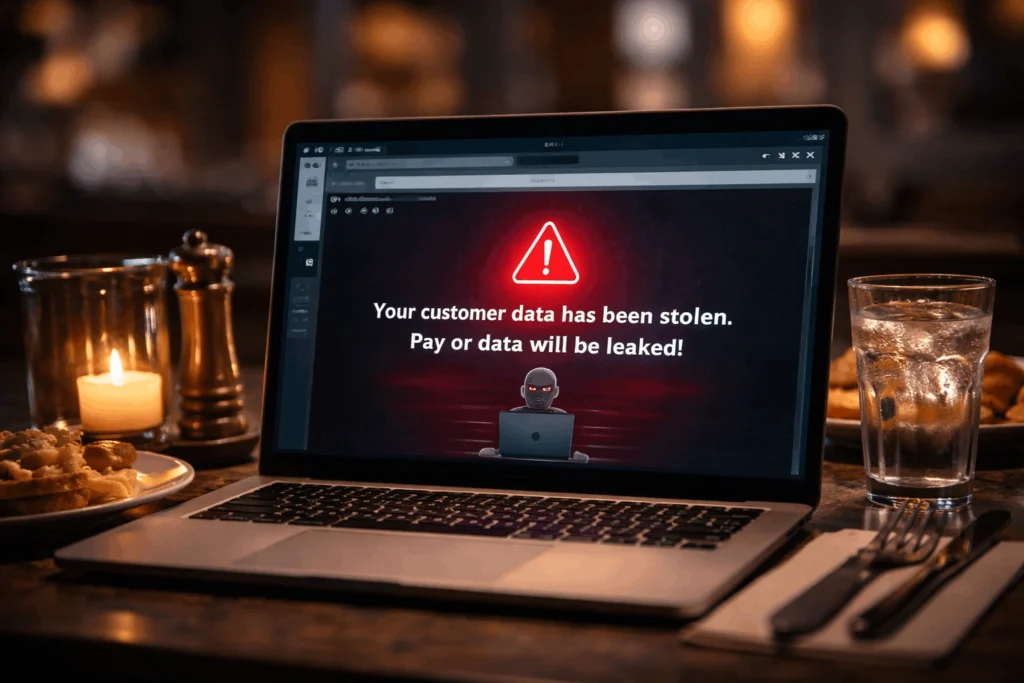
Restaurant customers across the United States recently received alarming messages tied to HungerRush extortion emails, a campaign that attempted to pressure the restaurant technology provider with threats of data exposure. The attacker distributed mass emails directly to patrons of restaurants using the HungerRush platform, claiming to possess sensitive data and demanding payment.
Early reports quickly circulated online as recipients shared screenshots of the threatening messages. Investigations later confirmed that the emails were sent using legitimate email infrastructure connected to the company’s systems, which made the campaign appear credible to many recipients.
Mass Emails Target Restaurant Patrons
The incident began when customers of restaurants using the HungerRush point-of-sale and ordering platform started receiving extortion messages in their inboxes. The attacker claimed that a large database containing restaurant and customer information had been stolen.
These messages warned that the alleged data could be exposed publicly if the company did not respond to the attacker’s demands. The campaign targeted restaurant patrons rather than the businesses themselves, which significantly expanded the visibility of the threat.
Some of the emails appeared to originate from addresses associated with HungerRush support services. This detail increased the credibility of the messages and caused confusion among recipients who believed the emails might be legitimate.
Claims of Stolen Customer Data
In the extortion emails, the attacker claimed to have stolen millions of records linked to the HungerRush platform. According to the messages, the database supposedly included various types of personal information connected to restaurant customers.
The alleged data included items such as:
- Names
- Email addresses
- Phone numbers
- Mailing addresses
- Dates of birth
- Passwords and credit card information
However, these claims appeared exaggerated. Security researchers analyzing the incident found no evidence that financial information or authentication credentials were actually exposed.
Legitimate Email Infrastructure Used
Technical analysis revealed that the emails were delivered through Twilio SendGrid, a widely used transactional email service. Because the HungerRush domain was authorized to send messages through this infrastructure, the emails passed standard security checks.
These checks included SPF, DKIM, and DMARC authentication mechanisms. When these systems validate a message successfully, email providers treat it as legitimate. As a result, many recipients saw the extortion emails in their main inbox rather than spam folders.
The use of trusted email delivery infrastructure highlights a growing tactic in cybercrime. Attackers increasingly abuse legitimate systems to make malicious campaigns appear authentic.
Possible Credential Theft Connection
Security researchers also identified potential links to earlier credential theft involving HungerRush infrastructure. Infostealer malware logs suggested that a device associated with a HungerRush employee may have been compromised in late 2025.
Those logs reportedly contained credentials linked to several internal and vendor platforms. The exposed systems allegedly included business services used for payments, customer management, and corporate operations.
Investigators have not confirmed whether that earlier credential exposure directly enabled the current campaign. The timeline does, however, illustrate how stolen credentials can remain useful to attackers months after an initial compromise.
HungerRush Confirms Limited Data Exposure
HungerRush later confirmed that the incident involved compromised credentials connected to a third-party vendor associated with its email marketing environment. This access allowed the attacker to obtain customer contact information and distribute unauthorized messages.
According to the company, the exposed data consisted only of basic contact details. The information may include customer names, email addresses, mailing addresses, and phone numbers.
HungerRush stated that its systems do not store payment card information and that no financial data, passwords, or Social Security numbers were exposed during the incident. The company also reported the attack to law enforcement and began investigating the breach.
Final Thoughts
The HungerRush extortion emails campaign demonstrates how attackers can exploit trusted communication infrastructure to launch large-scale social engineering attacks. By abusing legitimate email services and compromised vendor credentials, the threat actor managed to deliver convincing messages to thousands of restaurant customers.
Even when the exposed data appears limited, incidents like this create opportunities for follow-up phishing attempts and identity-based scams. Businesses that rely on third-party communication platforms must therefore monitor vendor access closely and enforce strong credential protections across all connected systems.
