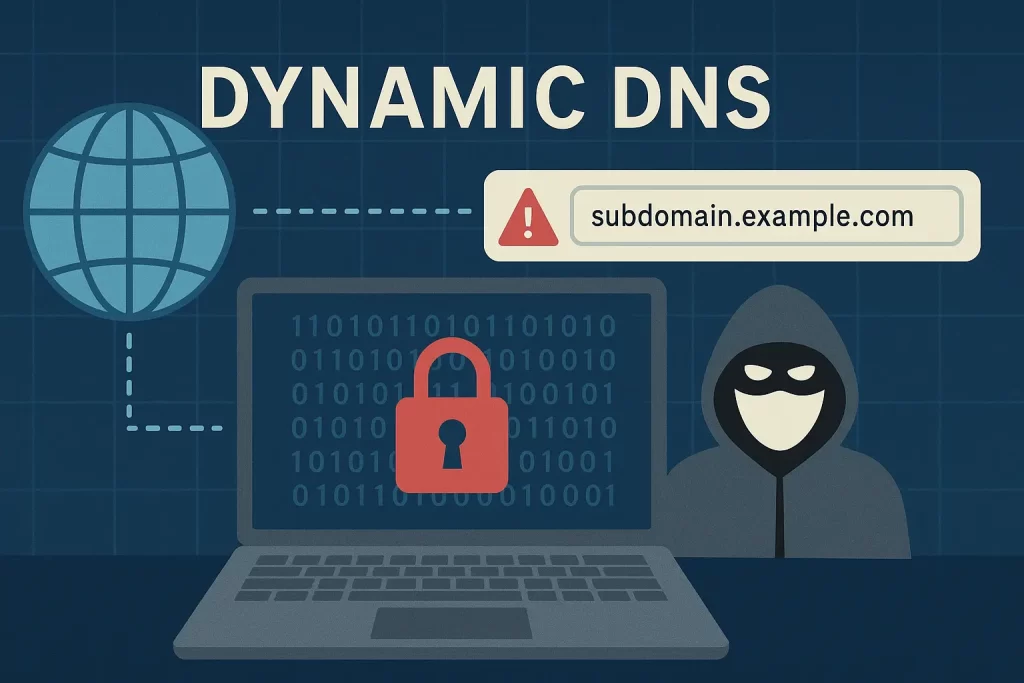
In the hectic atmosphere of cyber threats, attackers constantly seek new tools and techniques to evade detection. One such overlooked enabler is Dynamic DNS (DDNS). It’s a legitimate service that’s now being co-opted to power phishing campaigns, malware delivery, and command-and-control operations.
While Dynamic DNS was originally designed to help users cope with changing IP addresses, its convenience has unintentionally turned it into a powerful asset for cybercriminals.
What Is Dynamic DNS?
Dynamic DNS is a service that automatically updates the Domain Name System (DNS) when an IP address changes. It’s especially useful for users or businesses that don’t have a static IP address but need reliable remote access, for example, to a home server or security camera.
For legitimate users, DDNS provides flexibility. But for threat actors, it provides stealth and speed.
How Threat Actors Exploit DDNS
Cybercriminals exploit DDNS to rapidly spin up and rotate subdomains, making it harder for defenders to detect or block malicious infrastructure. Instead of relying on a fixed domain, attackers can:
- Hide behind dynamic IPs: Continuously shifting IP addresses make it difficult for blacklists to keep up.
- Create disposable subdomains: Services like DuckDNS, No-IP, ChangeIP, and even it.com domains allow users to quickly register subdomains, often without heavy verification.
- Enhance phishing believability: By attaching malicious content to domains with reputable top-level domains (TLDs) like .com, they increase the chance that users will trust and click malicious links.
Recent reports highlight how threat groups such as Scattered Spider use DDNS to support sophisticated phishing and malware campaigns. The ability to “rent” subdomains and pivot infrastructure at will makes it harder for security teams to keep up.
Why This Tactic Works
DDNS is popular among attackers for a few key reasons:
- Low cost or free: Many DDNS services are free or cheap, with little to no verification.
- Rapid deployment: Attackers can set up new subdomains in minutes.
- Evasion-ready: Once a domain is flagged or blacklisted, the attacker simply switches to a new one.
This agility undermines traditional defenses, which often rely on signature-based detection or static domain blocking.
The Cybersecurity Implications
The use of DDNS introduces a major blind spot in many organizations’ security strategies. Standard domain monitoring and IP filtering often fall short when attackers can morph their infrastructure overnight.
This tactic is especially effective for:
- Phishing sites that look legitimate thanks to clean URLs.
- Command-and-control (C2) servers that change location frequently.
- Malware hosting on seemingly innocent subdomains.
Security operations centers (SOCs) may struggle to trace malicious activity when DDNS obfuscates the source, and even threat intelligence feeds may lag behind in identifying and flagging these dynamic domains.
How to Defend Against Malicious DDNS Usage
Organizations must adapt to this emerging threat by combining technology with education and partnerships. Here are key steps to take:
Implement DNS Filtering
Use security solutions that go beyond basic domain blocking. Look for those capable of detecting patterns and behaviors typical of DDNS abuse.
Monitor Network Logs for DDNS Activity
Keep an eye out for unexpected connections to known DDNS providers or suspicious subdomains. Behavioral analysis can help detect anomalies.
Educate Employees
User awareness is still a powerful defense. Train staff to be wary of links, even those that appear to use trustworthy domains.
Work with DDNS Providers
Encourage responsible practices from DDNS services, including improved verification and quicker takedown processes for malicious domains.
Final Thoughts
Dynamic DNS remains a helpful tool for countless legitimate users, but its abuse by cybercriminals is a growing concern that defenders can no longer afford to ignore. By understanding how DDNS is exploited, organizations can take the necessary steps to detect, prevent, and respond to these stealthy attacks.
The fight against cybercrime demands vigilance on all fronts, including the infrastructure that too often flies under the radar.
