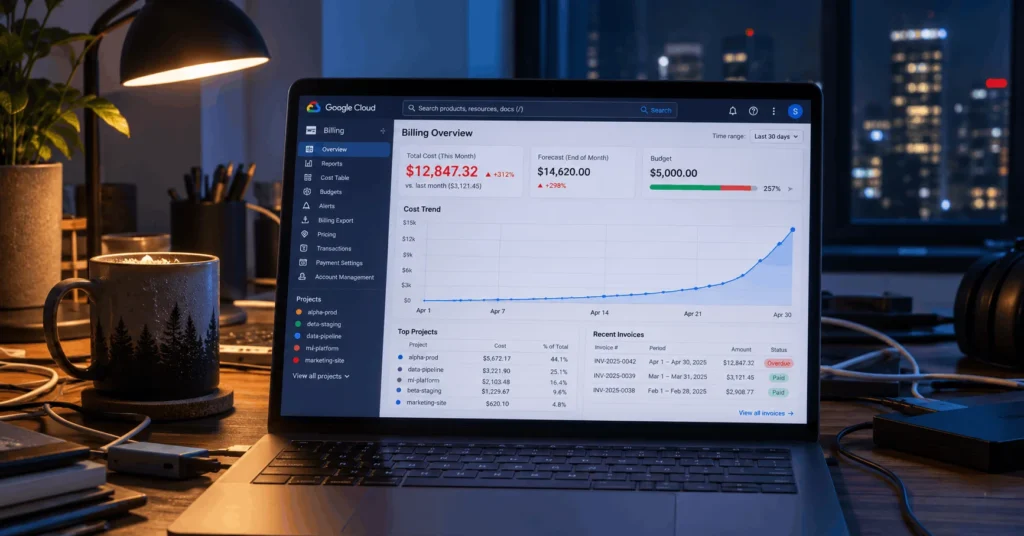
A hosting platform’s security failure ended with its customers paying for somebody else’s AI usage. Attackers who broke into Railway, a cloud platform developers use to deploy apps, went hunting for API keys. Not passwords, and not card numbers. Railway has now priced the damage from its data breach at roughly $740,000 in AI charges nobody approved.
The company laid out the full sequence on November 10, three weeks after the data breach pushed Railway to tell customers to rotate their secrets. That report reads like a battle log. For about 26 hours, attackers running AI agents probed for weaknesses while Railway engineers closed them, so neither side got a clean shot.
Why stolen AI keys turn straight into money
API keys for AI providers work like a tab nobody checks. Anyone with the key can send requests, and the provider bills whoever owns the account. Nothing looks odd from the outside. So a stolen key moves like cash, because the thief needs no buyer before the value starts flowing.
Railway believes the attackers wanted these keys to resell, or to feed model distillation. That means training a cheap model on the outputs of an expensive one. Someone else’s compute budget becomes your product. The search activity inside Railway during the data breach fits that theory. AI provider keys were the clear target, and only a few queries reached toward cloud, database, and payment services.
How the Railway data breach unfolded
The break-in started on October 20, when attackers exploited an unknown flaw in Railway’s build system. From there they escaped filesystem isolation and grabbed an internal credential. That opened stored build histories. It also let them copy Railway’s internal source code. They then read that code the way an auditor would, hunting for the next weak point.
They found another way in through a trust relationship set up too loosely. Abusing it handed them keys that decrypt customer environment variables, which is exactly where developers stash their API secrets. Railway pushed the attackers out by October 21 and disclosed the data breach a day later. The company’s own summary was blunt: “This was not a single breach followed by a single fix.”
Automation did the heavy lifting on both sides of this fight, which is the main reason it all played out inside a single day. Railway describes defending against stripped-down models with their safety guardrails removed, paired with an agent harness that researchers have seen before. Neither side held a decisive edge for most of that window.
How many customers the Railway data breach touched
Railway puts the ceiling at 1.85% of workspaces, or about 100,000. That number is the worst case rather than a confirmed count. The real total is probably smaller. Even so, a bound that size covers a huge number of projects.
The confirmed damage from the Railway data breach lands on a smaller group. Linked-account tokens for 1,852 users leaked, including GitHub OAuth tokens and AI agent keys. Railway reset all of them and warned the users involved. There was better news elsewhere, because the company found no sign that anyone downloaded customer Git repositories or touched their databases.
Black October and a pattern worth noticing
Railway’s data breach fits a wider pattern that security teams have tracked since October, and researchers tie it to a campaign called Black October, a targeted push against AI developer platforms that has already run through several of Railway’s peers. Northflank, OpenCode, Warp, and Lightning AI all turn up among its reported victims. The targeting looks deliberate.
Follow the money and the target choice makes obvious sense, because developer platforms sit on dense piles of keys. Every deployed app needs keys to run. One intrusion can therefore yield thousands of working secrets across dozens of providers. That beats phishing people one at a time.
What this means for anyone storing secrets in the cloud
Treat platform-held environment variables as handy storage, not a vault. Encryption at rest protected Railway’s customers right until the attackers found the decryption path, and the data breach turned on that moment, which is the part worth sitting with if you keep anything of value in a platform’s dashboard. Scoped keys, spending caps, and usage alerts would have blunted the damage. Rotation helps too. A key that changes monthly gives a thief a much shorter window.
Privacy tools play a supporting role here rather than a leading one. A VPN protects traffic in transit and keeps your activity away from anyone watching the connection, which is worth having. It cannot defend a key sitting in someone else’s database. Separate what you protect on the wire from what you protect at rest, then match the tool to the job.
Railway says it is working with AI providers on refunds, and it will cover any charges those providers will not pay back. Engineers have since patched every flaw the attackers exploited. That response lands better than most, though it arrives well after the money moved.
Final Thoughts
The dollar figure will fade from memory faster than the method behind it. Attackers used AI agents to find the holes, and the prize they carried out was AI access itself. That is a closed loop with no obvious brake on it. Defenders won their 26-hour fight, but only barely, and only because they were watching closely.
Anyone running apps on a hosted platform should read the Railway data breach as a prompt to audit their own stored keys this week. Check what each key can reach. Cap what it can spend, and rotate anything that has sat untouched for months. The next campaign will aim at the same soft spot, because it keeps working.
