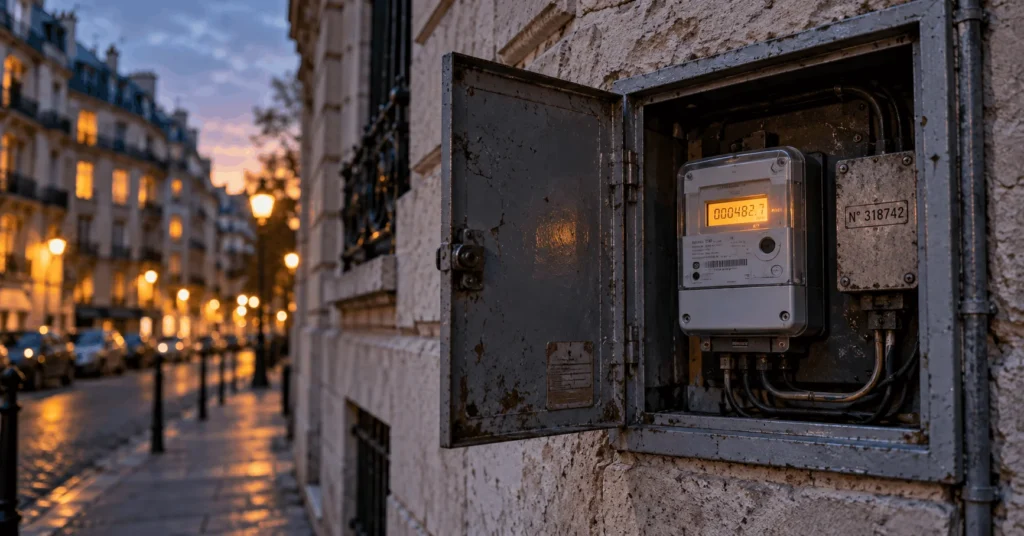
Letters have been arriving at French households carrying an uncomfortable message: a system most recipients never knew existed was holding their personal details, and no longer holds them alone. The sender is ENGIE. Criminals got into a prospecting tool that the supplier’s sales partners rely on, and the ENGIE data breach that followed pushed names, addresses and contract references into circulation. The corporate network itself stayed clear.
Why the Stolen Fields Make Such Good Bait
Exposed fields here read like a utility account page rather than a hacker’s trophy cabinet. Contract numbers, customer IDs, phone numbers, email and postal addresses and full names all sit in the haul. Alongside them sit the supply-point references utilities use to tie a meter to a property, PDL for electricity and PCE for gas. Bank details stayed out of it, which caps the financial exposure from the ENGIE data breach and nothing beyond that.
What a Meter Reference Buys an Attacker
PDL and PCE codes are the kind of thing only a real supplier would know. Each one points at a single meter at a single address, and it prints on every bill, so hearing it read back over the phone builds trust faster than any logo could. Pair it with the right name and street, and a cold approach stops sounding cold. That is the part of the ENGIE data breach worth worrying about.
The Platform Was Never Really ENGIE’s
Sales partners needed somewhere to run prospecting campaigns and market energy offers, so they worked inside a shared tool that became the entry point for the ENGIE data breach. That tool held customer contact records. It also sat outside the walls ENGIE spends its security budget on. Odd access patterns surfaced, the company pulled the plug, and forensic work since points nowhere near internal systems.
Phishing and Fraud Follow the ENGIE Data Breach
Every affected customer got a fraud warning alongside the notification, and it is more than a formality. France already has a thriving trade in fake energy bills and refund scams, most of it built on guesswork. The guesswork is now redundant. Someone working from this list knows the supplier, the contract, the address and the name before they dial.
Unpaid balance notices, refunds on old bills, urgent meter inspections: the formats are predictable. Delivery varies more, arriving by email, by text, or by a phone call from somebody who sounds exactly like a utility employee. What the caller wants is the bank detail the ENGIE data breach failed to deliver. Suspicion is free, and it works.
Third-Party Risk Keeps Catching Big Companies
Core infrastructure at a company this size gets serious money and serious attention. Partners, resellers and agencies handling the same customer data run on thinner margins and lighter scrutiny, a gap attackers mapped years ago. This ENGIE data breach travels a well-worn road, one that has already passed through retail chains, airlines, insurers and telecoms. None of it is visible from the customer side.
Nobody reads an energy contract and pictures their address ending up in a partner’s sales database. Nothing in the welcome pack covers it. So the first real notice arrives in an envelope, after the fact.
ENGIE Has Been Here Before
ENGIE North America’s retail arm, Engie Records, went through a version of this last year. The Scattered LAPSUS$ Hunters crew posted records and said they came from that unit’s Salesforce environment. Different continent, different platform, different corner of the group. The shared ingredient is a cloud service parked next to the core business, holding live customer data under looser supervision.
Attribution for the current incident remains thin, and that may stay the case. No gang has stepped forward and ENGIE has named nobody, so the inquiry grinds on with no public suspect. Quiet extortion crews sometimes mean a private sale rather than a public dump.
What Affected Customers Should Do
Because the details are already out, the useful response starts where the damage would be easiest to do. Reset the ENGIE account password with something used nowhere else, and switch on two-factor login. Then treat unsolicited contact as hostile, particularly anything steering toward payment information. Anyone caught in the ENGIE data breach should assume their details are already circulating, and act on that basis rather than waiting for proof.
Billing emails that arrive unprompted deserve no clicks, however convincing the branding. Type the supplier’s address yourself or open the app instead. If a call feels wrong, hang up and ring the number printed on an old paper bill. No legitimate energy company asks for bank details on a call it did not place.
Wider privacy habits matter too, since leaked contact data rarely stays with whoever took it. Routing a connection through a VPN keeps an IP address away from ad networks and data brokers, which leaves one fewer identifier to cross-reference against a list like this one. NordVPN and Surfshark both filter known phishing domains at DNS level. Neither undoes the ENGIE data breach, though both shrink the delivery surface.
Final Thoughts
Speed and candour counted for something in this case, and ENGIE showed both. The company spotted the intrusion, cut it off, told regulators, and wrote to every customer on the list. French customers are the only ones affected. None of that helps the people whose details are now in circulation.
The uncomfortable part of the ENGIE data breach has nothing to do with ENGIE’s own defences. A hardened core network is worth very little when a sales partner’s marketing tool holds identical records on a fraction of the budget, and no customer gets to inspect that arrangement. Caution and decent account habits are what remain. Expect this shape of story again.
