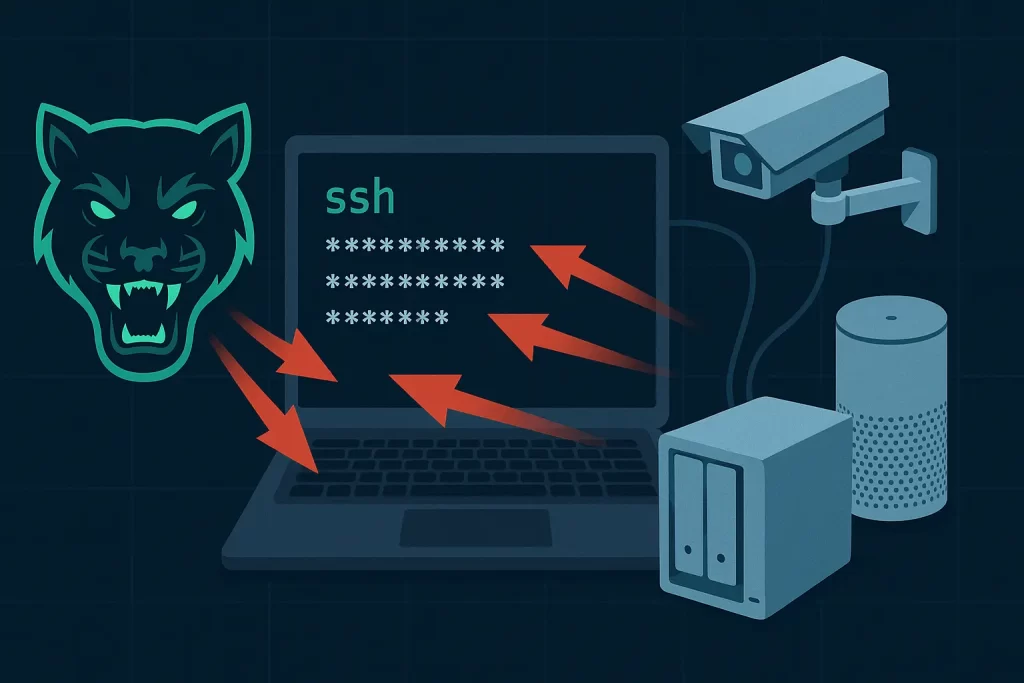
A newly discovered botnet called PumaBot is making rounds in the cybersecurity world. Designed to infiltrate Linux-based systems, this malware takes a focused and stealthy approach, specifically targeting Internet of Things (IoT) devices and surveillance systems through brute-force SSH attacks. Here’s a closer look at how PumaBot operates, what sets it apart from other botnets, and how you can protect your systems against it.
A Precise Threat: How PumaBot Operates
Unlike conventional botnets that randomly scan the internet for vulnerable hosts, PumaBot is selective in its targeting. It receives specific IP addresses to attack from its command-and-control (C2) server, identified as ssh.ddos-cc.org.
Once it receives a target, PumaBot attempts to brute-force SSH login credentials. Trying numerous username/password combinations to gain unauthorized access via port 22. These credentials are also supplied by the C2 server, indicating a high level of coordination behind the scenes.
Establishing Persistence on Compromised Devices
If the botnet successfully breaches a system, it takes multiple steps to ensure long-term access and control:
- Installs a malicious binary into the directory /lib/redis.
- Creates a systemd service named redis.service, which automatically reactivates the malware every time the system reboots.
- Injects its own SSH key into the authorized_keys file of the root account, allowing attackers to reconnect without needing a password.
These techniques not only make the malware persistent but also significantly complicate detection and removal efforts.
Targeting Surveillance and IoT Systems
Security researchers have noted that PumaBot appears to have a particular interest in surveillance equipment. It scans for the string “Pumatronix” on infected devices. That’s a clear sign it’s looking for hardware made by the Brazilian manufacturer of security and traffic monitoring systems.
This suggests that PumaBot’s operators may be aiming to gain access to surveillance networks, either to exfiltrate data or to build a network of hijacked devices for future attacks.
What PumaBot Does After Infection
Once a system is compromised, PumaBot doesn’t just sit idle. It immediately begins executing malicious activities:
- Cryptocurrency Mining: PumaBot installs and runs xmrig, a popular open-source Monero miner. This process drains device resources, slows down operations, and can even cause physical hardware degradation over time.
- Honeypot Detection: The malware runs the uname -a command to check the environment and avoid deploying itself in security research traps known as honeypots.
- Network Obfuscation: Because it operates using IPs supplied by a C2 server, PumaBot’s activity is harder to detect through traditional intrusion detection systems.
Why PumaBot Botnet Stands Out
While botnets are nothing new, PumaBot’s precision targeting, advanced persistence mechanisms, and focus on critical IoT infrastructure make it a unique and dangerous threat. Its use of systemd services for stealth, and its ability to avoid honeypots, show that the developers behind PumaBot are well-versed in both Linux environments and counter-forensic tactics.
How to Protect Your Systems
To defend against PumaBot and similar threats, cybersecurity experts recommend the following best practices:
- Disable SSH access if it’s not needed. This is especially important for consumer-grade IoT devices.
- Use key-based SSH authentication rather than relying on passwords.
- Enforce strong, unique passwords on all connected devices.
- Restrict SSH access to known, trusted IP addresses using firewall rules.
- Regularly update firmware on all IoT and networked devices to patch known vulnerabilities.
- Monitor system logs for unusual login attempts or spikes in CPU usage, which could signal brute-force attacks or unauthorized mining activity.
Final Thoughts
PumaBot botnet represents a new wave of targeted, sophisticated malware designed to exploit the growing number of connected devices in homes and enterprises. By leveraging brute-force attacks and strategic targeting, it bypasses generic defenses and establishes long-term control over infected systems.
As the line between IT infrastructure and IoT blurs, staying vigilant against threats like PumaBot is essential. Secure your SSH access, update your devices, and monitor your network closely. Because the next botnet may already be knocking on your digital door.
